
Jul 5, 2026
Rattan, Aluminum, Teak, Stainless Steel, or WPC: Which Outdoor Furniture Material Is Best for Your Backyard?
Aluminum, teak, rattan, steel, or WPC? Compare durability, maintenance & style to find the best outdoor furniture material for your backyard. Read our full guide.
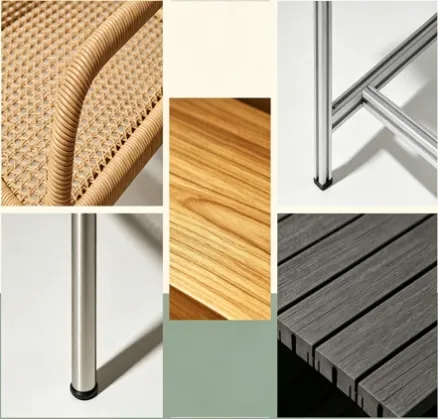
Choosing the right material is the most important step in furnishing your dream backyard. It needs to look great and stand up to sun, rain, and everything in between. Five common materials—PE rattan, aluminum, teak, stainless steel, and Wood-Plastic Composite (WPC)—are popular choices, each with its own strengths. This guide will help you decide which is perfect for you.
Five Core Materials at a Glance
Material | One-Sentence Summary | Pros | Cons | Best Use Cases |
|---|---|---|---|---|
Aluminum | Lightweight and durable modern choice | Lightweight, rust-proof, low-maintenance, sleek look | Modern look, may get hot in direct sun | Balconies, small patios, modern spaces, humid/coastal areas |
Teak | Premium natural wood with timeless elegance | Natural oils resist rot/insects, warm feel, ages beautifully | Expensive, needs oiling or accept silver-grey patina | High-end yards, classic/natural aesthetic |
PE Rattan | Durable, weatherproof, and vacation vibe | Casual look, waterproof, UV-resistant, lightweight, easy to clean | Low-quality types can crack; crevices trap dirt | Poolside, balconies, creating a relaxed resort feel |
Stainless Steel | Strong and robust choice for modern design | High strength, excellent corrosion resistance (especially grade 316), modern | Heavy, hard to move, shows fingerprints/water spots | Commercial use, modern yards, windy areas |
WPC | Economical and practical wood alternative | Wood-like look, waterproof, insect-proof, low-maintenance, affordable | Less natural feel, poor quality can warp under sun | Budget projects, low-maintenance needs, walkways, bases |
How to Choose Based on Your Core Needs?
Once you know the basics, narrow down your options based on a few key factors.
1. What's Your Climate?
- Humid/Rainy/Coastal Areas: Go with Aluminum and PE Rattan. Aluminum won't rust, and PE rattan is waterproof and mold-resistant. High-grade Stainless Steel (e.g., 316) is also excellent. While Teak is naturally durable, lower-grade plantation teak can be risky; opt for high-oil content. WPC can absorb moisture and develop mold over time in constant humidity.
- Hot, Sunny Areas: Aluminum and PE Rattan (with UV stabilizers) are top choices as they won't crack or fade. Teak will naturally age to a silver-grey, which is normal and adds character. Avoid poor-quality WPC, as it can chalk and crack under intense UV.
2. How Much Maintenance Are You Willing to Do?
- Almost Zero: Choose Aluminum or high-quality Stainless Steel. A damp cloth is all you need.
- Low Maintenance: PE Rattan and WPC are good. PE rattan needs a soft brush and water; WPC is easy to clean. You can let Teak age naturally, or oil it if you prefer its original golden hue.
3. What Are Your Budget and Style Preferences?
- High Budget, Premium Look: Teak is your choice. It's unique, durable, and can last for decades.
- Budget-Conscious, Stylish: A combo of Aluminum and PE Rattan offers great value and modern designs. WPC is the most affordable wood-alternative.
Conclusion: The Choice Is Yours
There is no single "best" material, only the best one for you.
- Zero maintenance and a modern look: Choose Aluminum.
- Natural, premium quality: Choose Teak.
- Relaxed vibes with minimal fuss: Choose PE Rattan.
- Ultra-durable and industrial modern: Choose Stainless Steel.
- Budget wood-look that's easy to care for: Choose WPC.
It's wise to test the comfort of furniture before buying, as it's an investment in your relaxation for years to come. By matching the material to your climate, budget, and aesthetic, you'll create the perfect backyard oasis.